Preview This is a draft of the public site. The roster below is final per the proposal; numbers and dates elsewhere on the site are placeholder values until launch.
K · search GitHub Register
About · the team behind the benchmark

Organizers.

Twenty-four organizers across 14 institutions in 5 countries!

24organizers
5tracks
14institutions
5countries
Organizing team · author order

The 24 people running the EEG/EMG Foundation Challenge.

Listed in the exact order of the proposal's author block. Track / role tag on each card maps to the five challenges (EEG-to-IMG, BCI decoding, sleep onset, EMG-to-Text, and Foundation Transfer), the core platform team, the host organisation, or the senior advisory bench.

24 organizers · 1 lead
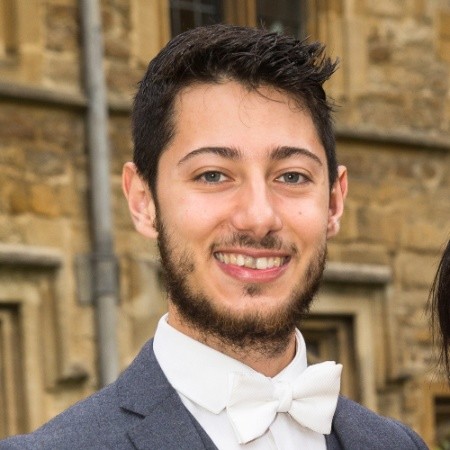
Bruno Aristimunha
Bruno Aristimunha Lead organizer · core

Research Scientist at Yneuro (France) and Honorary Research Associate at UC San Diego. PhD in Computer Science from Paris-Saclay and Federal University of ABC, advised by Sylvain Chevallier, Marie-Constance Corsi, and Raphael Y. de Camargo. Leads the Braindecode and MOABB libraries. Same lead as the 2025 EEG Challenge. Personal site →

Yneuro UCSD Paris-Saclay Braindecode MOABB
Arnault Caillet
Arnault Caillet Core · operations

Yneuro and Imperial College Bioengineering. PhD work on EMG biomechanics modelling. Core team for the EEG/EMG Foundation Challenge: runs day-to-day platform operations and connects the Yneuro engineering side with the academic track teams.

Yneuro Imperial
Hubert Banville
Hubert Banville Track 01 · EEG-to-IMG

Research Scientist in the Brain & AI group at Meta FAIR. PhD at Inria Parietal on self-supervised learning for EEG; previously a researcher at InteraXon. Designs the SSL pretraining for the EEG-to-IMG encoder.

Meta FAIR Brain & AI Inria InteraXon SSL
Pierre Guetschel
Pierre Guetschel Core · decoding methods

PhD candidate at the Donders Institute. Deep learning for EEG decoding with a focus on transfer learning, self-supervised learning, and foundation models. Core developer of Braindecode and MOABB.

Donders Braindecode MOABB
Jean-Rémi King
Jean-Rémi King Track 01 · Brain & AI lead

CNRS researcher (ENS, detached) leading the Brain & AI team at Meta AI. Studies the brain and computational bases of human intelligence; develops models that decode brain activity from MEG, EEG, electrophysiology, and fMRI.

Meta FAIR Brain & AI CNRS
Vinay Jayaram
Vinay Jayaram Track 01 · Alljoined

At Alljoined, assembles large-scale, image-aligned EEG corpora. Owns the dataset side of Track 1: stimulus protocols, alignment, and the public release used as the warm-up split.

Alljoined
Ugo Nunes
Ugo Nunes Track 01 · Alljoined

Alljoined. Builds the data pipelines and evaluation harness for Track 1, keeping the EEG-to-image retrieval scoring reproducible across labs and submission environments.

Alljoined
Simon Kojima
Simon Kojima Track 02 · NEARBY

Postdoctoral researcher at Inria Bordeaux on the NEARBY project, working on noise- and variability-robust BCIs for out-of-the-lab use. Motor-imagery BCIs, EEG variability, and ML for neural decoding.

Inria NEARBY
Pauline Dreyer
Pauline Dreyer Track 02 · PROTEUS

PhD candidate at Inria Bordeaux on the PROTEUS project. Active brain-computer interfaces with a focus on understanding and addressing within-user variability, the same question Track 2 evaluates.

Inria PROTEUS
Raphaëlle N. Roy
Raphaëlle N. Roy Track 02 · neuroergonomics

Professor of neuroergonomics & physiological computing at ISAE-SUPAERO. Co-founder & vice-president of the French BCI association; organised the first passive-BCI competition. Adds the operator-state perspective to BCI evaluation.

ISAE-SUPAERO Toulouse
Fabien Lotte
Fabien Lotte Track 02 · Potioc lead

Research Director at Inria Bordeaux & LaBRI, leading project-team Potioc on Brain-Computer Interfaces. PI of ANR REBEL/PROTEUS and ERC BrainConquest/SPEARS. USERN Prize 2022; Lovelace-Babbage prize 2023.

Inria LaBRI Potioc
Jiansheng Niu
Jiansheng Niu Track 03 · Sleep onset

InteraXon. Owns the consumer-wearable side of Track 3: recording protocols, signal-quality monitoring, and the comparison of Muse-grade EEG against clinical sleep-staging baselines.

InteraXon
Maurice Abou Jaoude
Maurice Abou Jaoude Track 03 · sleep ML

Senior Research Scientist at InteraXon (makers of the Muse wearable EEG and fNIRS headband). Builds algorithms that turn raw EEG into clinical signals, including automated sleep staging at expert agreement and non-invasive detection of neurological abnormalities.

InteraXon Muse
Pranav Mamidanna
Pranav Mamidanna Track 04 · EMG-to-Text

Research Fellow at Imperial College London. Works at the boundary of AI and neuroscience, combining mathematical models of physical and biological systems with modern AI representations. Targets clinical translation.

Imperial Bioengineering
Alex Gramfort
Alex Gramfort Track 04 · EMG-to-Text

Senior Research Scientist Manager at Meta Reality Labs, Paris. Works on machine learning for surface-EMG decoding. Previously Research Director at Inria leading the MIND/Parietal team. Statistical ML, signal processing, and biosignal computing.

Meta Reality Labs MNE
Marie-Constance Corsi
Marie-Constance Corsi Track 02 · interpretability

Inria Research Scientist at Paris Brain Institute (NERV Lab). Identifies neurophysiological markers of BCI training and develops interpretable AI tools for neurological-disease diagnosis. Reviews Track 2 submissions for clinical and interpretability quality, not just leaderboard score.

Inria Paris Brain Institute
Lionel Kusch
Lionel Kusch Core · AWS infra

Machine-learning infrastructure engineer at Yneuro. Cloud deployment, software engineering, and computational-neuroscience research projects. Owns the AWS submission and ranking pipeline.

Yneuro AWS
Thomas Semah
Thomas Semah Host org · Yneuro CEO

Founder & CEO of Yneuro, the host organisation for the EEG/EMG Foundation Challenge. CentraleSupélec / ESPCI Paris-PSL alum, Stanford School of Medicine master's. Yneuro provides infrastructure and operational support for the challenge.

Yneuro CEO
Seyed Yahya Shirazi
Seyed Yahya Shirazi Core · data & standards

Assistant Project Scientist at UC San Diego. Led HBN-EEG curation and annotation. Lead Scientist for BIDS extension proposals to EMG and Stimulus. Core member of the HED working group and the EEGLAB development team.

UCSD BIDS · EMG HBN-EEG
Scott Makeig
Scott Makeig Senior advisor · ICA pioneer

Founding director of the Swartz Center at UCSD. Pioneer in EEG analysis and the development of Independent Component Analysis (ICA) for brain-signal decomposition; leader in mobile brain/body imaging (MoBI).

UCSD ICA
Isabelle Guyon
Isabelle Guyon Senior advisor · ChaLearn

Director, Research Scientist at Google DeepMind, in detachment from her professorship at Université Paris-Saclay. President of ChaLearn, community lead of Codalab, JMLR action editor, NIPS 2016 program co-chair, NIPS 2017 general co-chair. 2020 BBVA Frontiers in Research Award (with Schölkopf and Vapnik) for SVMs.

DeepMind ChaLearn Paris-Saclay
Terrence Sejnowski
Terrence Sejnowski Senior advisor · Salk

Co-developed the Boltzmann machine; foundational work in deep learning. Connects neuroscience and machine learning. Carries forty years of context on what the field has and hasn't already tried.

Salk Institute UCSD
Sylvain Chevallier
Sylvain Chevallier Core · Codabench

Full Professor at Université Paris-Saclay, board member of DATAIA/ClusterIA, co-leader of the TAU team. Leads the Codalab/Codabench framework, the platform the competition runs on.

Paris-Saclay Inria Codabench
Arnaud Delorme
Arnaud Delorme Core · EEGLAB

Leads the EEGLAB project. Research Director at CNRS, Research Scientist at UCSD. Owns the reproducibility audit at test-freeze, which is what lets any top entry be replayed byte-for-byte from another team's pipeline.
UCSD CNRS EEGLAB
Reach the team

Questions about a track, a dataset, or your submission?

The shared mailbox is the canonical address for organiser-side questions. Discord is the fastest path for participant chatter and ad-hoc protocol clarifications — same setup that ran the 2025 challenge.